
One Person, One Classroom, One Hundred and Twenty-Five Years
“In 1984, a young woman named Nina McPherson walked into a classroom at Central China Normal University in Wuhan.
At the time, none of us knew that she represented an organization with a history already stretching back more than eight decades. Nor did we understand that her presence in that classroom was part of a much larger story connecting New Haven and China, Yale and Yali, two cultures separated by oceans and political systems but joined by a quiet belief in the power of education.
To us, she was simply Nina.”
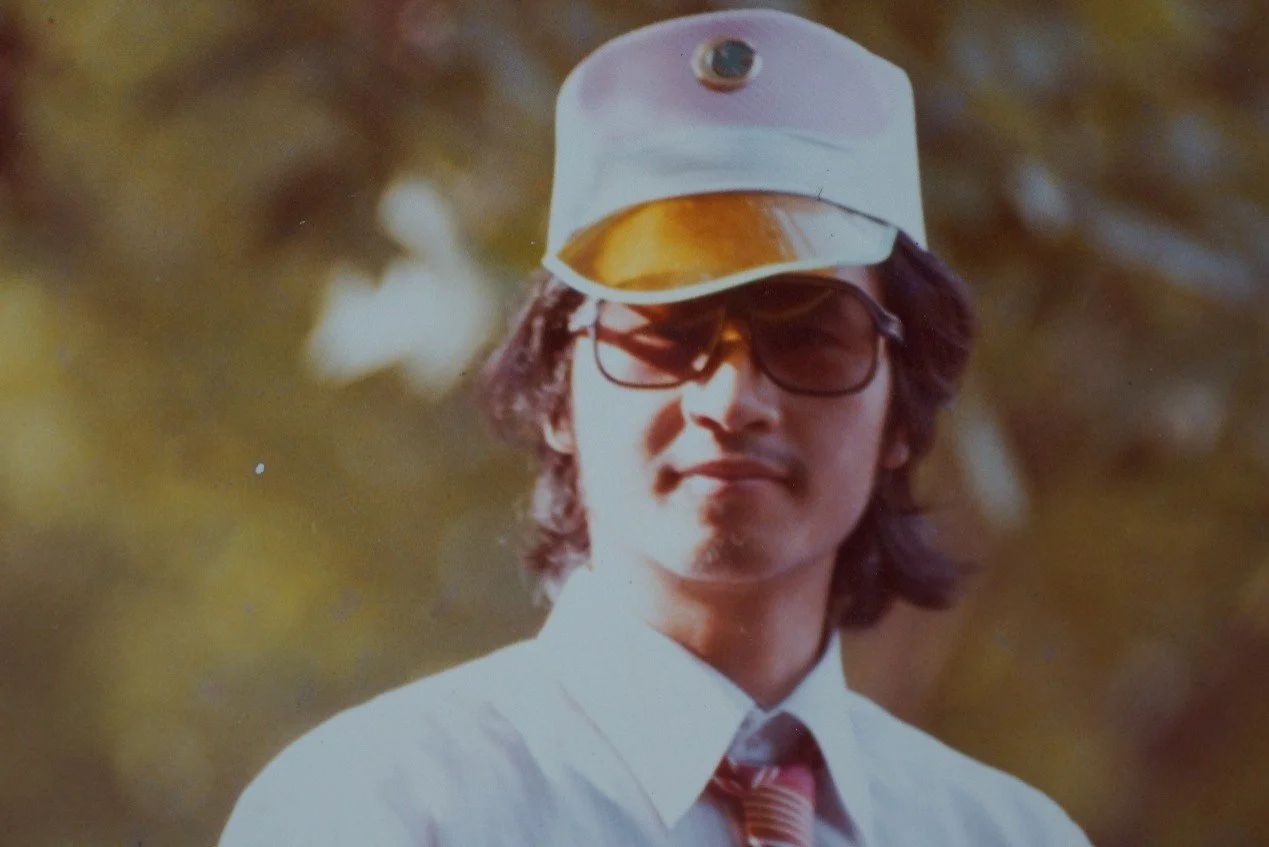
A photo of the author taken by Nina Mcpherson in 1985
“Fresh out of Yale University, blonde, energetic, and not much older than many of the students she taught, she became the first foreigner most of us had ever met. China in the mid-1980s was only beginning to open to the world. For many of us who had grown up in small towns and rural villages, the outside world was something we knew only through books, newspapers, and imagination.
Then Nina appeared.
The first thing she gave us was not grammar or vocabulary. It was a name.
On the first day of class, she assigned English names to each student, offering several choices and encouraging us to select one we liked. I chose Tim simply because the first letter of my last name is also T. At the time it seemed like a small classroom exercise. Forty years later, I realize it was much more than that.
That name traveled with me from Wuhan to Beijing, from Frankfurt to Zurich, from Paris to New York. It appeared on business cards, conference badges, and countless introductions. Through it, a young man from rural western Hunan gradually learned to move through an international world.
The name was a gift. But the greater gift was confidence.
Nina made foreignness feel ordinary.
She showed us that people from different countries were not mysterious or frightening. They laughed, made mistakes, shared meals, worried about life, and cared about their students. Through her, many of us began to trust people beyond our own culture. In later decades, Americans, Germans, French, Swiss, Indians, Pakistanis, Vietnamese, Koreans, and Nigerians would become colleagues, partners, and friends. Looking back, I can trace that openness to a young Yale graduate standing in front of a classroom in Wuhan.
Photographs from those years preserve moments that memory alone cannot.”
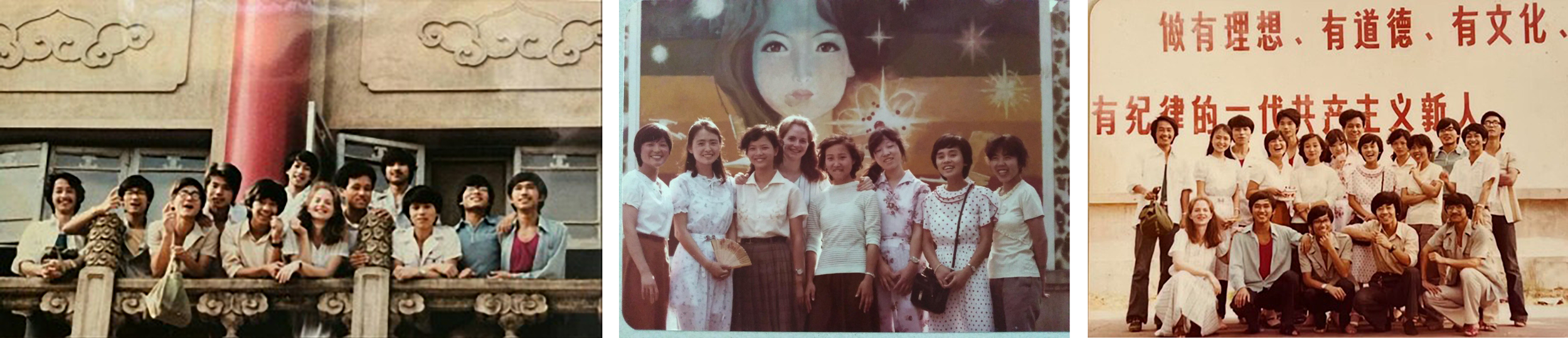
“In one picture, Nina stands among a group of young men leaning over a balcony railing. Behind them rises a massive red column of the university building, occupying the center of the frame. The students wear expressions that only youth can produce—half confidence, half uncertainty, entirely hopeful. Looking at the photograph today, the red pillar seems almost symbolic. It stands like a bridge between worlds, connecting students who had barely seen beyond China with a visitor who had crossed the Pacific to teach them.
In another photograph, Nina stands among a row of female students. Behind them is a large mural of a young woman’s face, painted in soft yellow tones and decorated with sparkling stars. The image captures the aspirations of an era. China was beginning to imagine possibilities beyond old limitations, and those students, like the figure in the painting, looked toward a future that seemed both distant and luminous.
A third photograph shows the entire class gathered around Nina. Behind them hangs a political slogan familiar to every Chinese student of that generation. Yet what catches the eye today is not the slogan but the people. The future professors, teachers, scholars, businesspeople, and professionals stand together around a teacher who, without knowing it, would become part of their life stories.
Nina’s influence extended far beyond language instruction.
She introduced us to Impressionism and Post-Impressionism. For many students, it was the first time seeing Western art. Some still remember their first encounter with nude paintings in a university library under Nina’s guidance. Others remember learning about Monet, Van Gogh, and Cézanne. Several classmates later became university professors and would eventually teach those same ideas to new generations of students.
Her writing classes were equally memorable. She corrected essays with extraordinary care, evaluating vocabulary, sentence quality, content, grammar, and rhetoric separately. She selected excellent phrases from student papers, typed them on a typewriter, and distributed them for discussion. Long before “student-centered learning” became a fashionable term, Nina practiced it naturally.
She taught us how to write. More importantly, she taught us how to think.
Outside the classroom, she embodied generosity.
She lent students her camera for a budget trip to Lushan Mountain. She shared books. She brought chocolates sent by her mother from America—tiny treasures in a China where few students had ever tasted chocolate. She invited students to meals and encouraged conversations that continued long after class ended.
Years later, classmates would remember details that seemed insignificant at the time: a lunch of hot dry noodles, an evening conversation outside her apartment, advice about writing to the university president or the city mayor, encouragement to speak English without fear.
What remains remarkable is not any single memory, but the consistency of them all.
Again and again, people remember kindness.
Again and again, they remember curiosity.
Again and again, they remember respect.
Only later did many of us learn that Nina was part of a much larger story.
She had come to China through Yale-China Association, known in Chinese as the Yali Xiehui.
Founded in 1901, Yale-China has spent more than a century building relationships between China and the United States through education, medicine, public health, and cultural exchange. Its impact can be measured in institutions, schools, hospitals, and programs. Yet perhaps its deepest influence cannot be measured statistically.
Its true legacy lives in human relationships.
History often records organizations through budgets, buildings, and official achievements. But organizations ultimately shape history through people. The influence of Yale-China was carried not only by presidents, scholars, and administrators. It was also carried by individuals like Nina, who entered classrooms, shared knowledge, listened carefully, and built trust one conversation at a time.
One young teacher influenced dozens of students.
Those students became professors, educators, researchers, entrepreneurs, and professionals.
They taught thousands of students of their own.
The circle expanded.
This is how influence moves across generations.
This is how history works.”
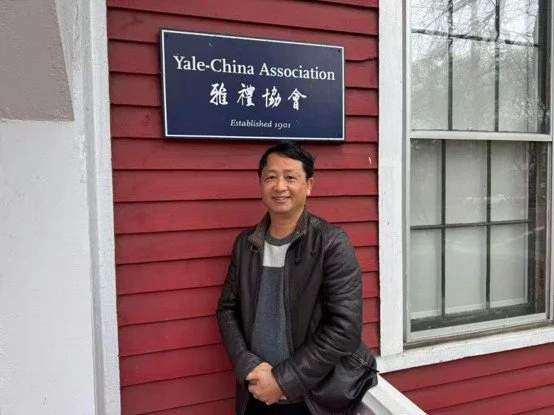
The author visited Yale-China Association in April 2026
“When I visited Yale-China’s headquarters at Yale University in 2026, more than forty years after Nina first walked into our classroom, I found myself thinking less about institutions and more about people.
Organizations create opportunities.
People create memories.
Organizations build bridges.
People cross them.
For 125 years, Yale-China has connected two nations not primarily through policies, but through relationships. It has done so through countless individuals whose names may never appear in history books, yet whose quiet actions altered lives.
For our class, one of those people was Nina McPherson.
We remember her not because she represented an institution.
We remember her because she made the institution human.
And perhaps that is the most enduring achievement of Yale-China over the past century and a quarter: transforming distant nations into familiar faces, and turning strangers into lifelong friends.”