
From Xiangya to Yale: A Journey of Gratitude
“In July 2024, I boarded a plane to New Haven for the first time, carrying with me a deep passion for nursing informatics and elderly care. From the moment I arrived at Yale, language became my first real challenge. I started from the very basics — practicing daily greetings, learning how to craft an elevator speech, working through sentence structures and paragraph writing in class, and spending long hours in the library sharpening my listening and speaking skills. Slowly, English stopped feeling like a barrier and became something more — a window through which I could truly feel and understand this new world around me. Every conversation, every lecture, every debate quietly expanded the boundaries of who I was. And through it all, the Yale-China Association made sure I never felt alone. It was through the Association that I found myself hiking through hills blazing with autumn color alongside friends from across the globe, sitting in a chapel letting the resonance of a pipe organ wash over me, and laughing around a dinner table, telling stories of home in my still-imperfect English. These moments may have seemed small, but they were the quiet strength that carried me through my time far from home.”
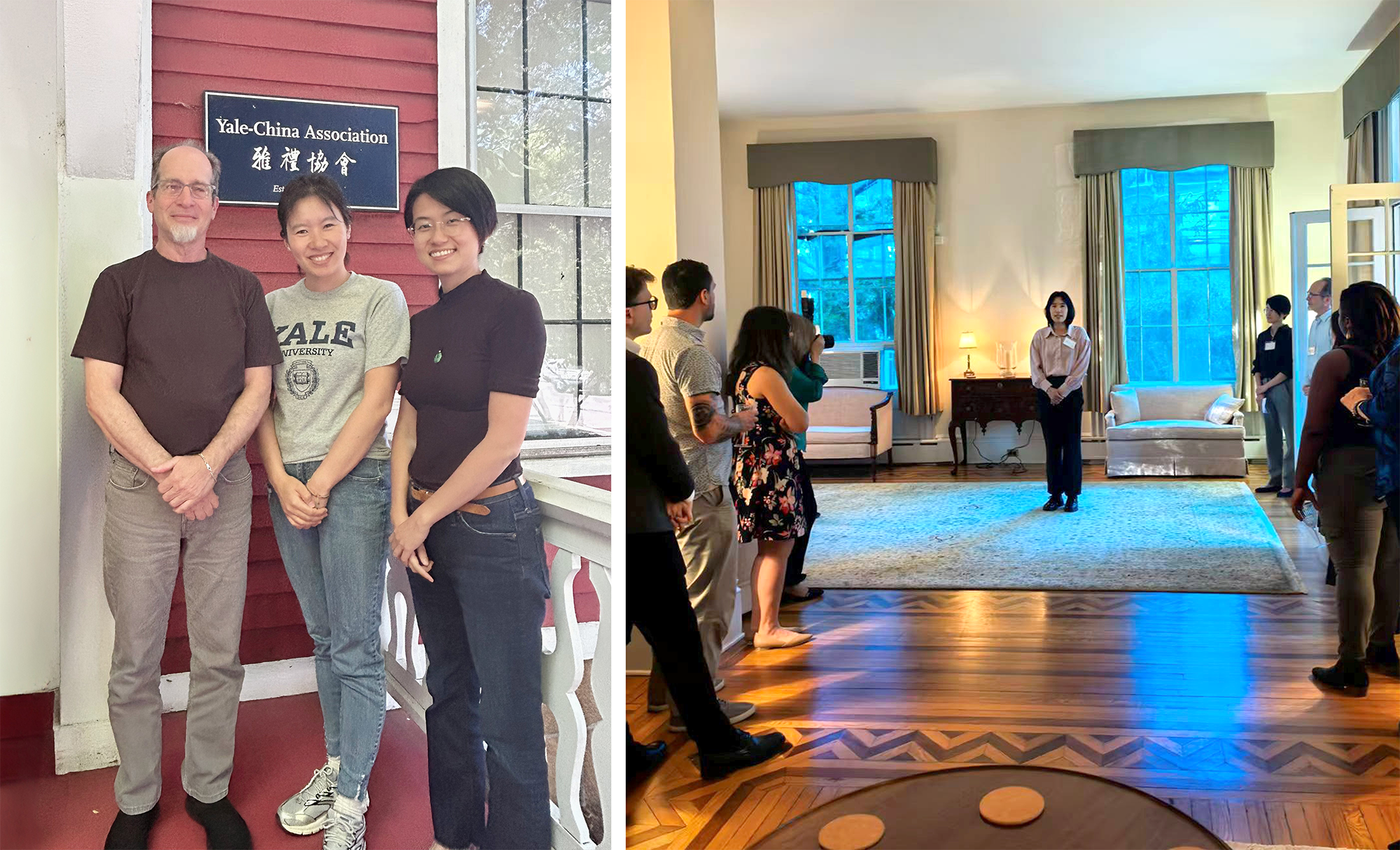
“Inside the classrooms of Yale School of Nursing, something shifted in me. I audited courses in quantitative research methods and healthcare innovation, attended lectures on NIH grant writing and case analysis, and sat alongside scholars from around the world to discuss how digital health could genuinely serve the needs of older adults. Every discussion felt like a beam of light falling on the question I cared about most deeply — how could technology be made gentle enough to truly understand the lives of elderly people, and how could frontline healthcare workers be given tools that were both intuitive and precise? It was here at Yale that I saw, more clearly than ever before, the vast and promising intersection between nursing informatics and elderly care. The memory of morning sunlight streaming through the nursing school windows, falling across a desk full of lecture notes, still lives clearly in my mind — a reminder of why I had come, and what I had found.”
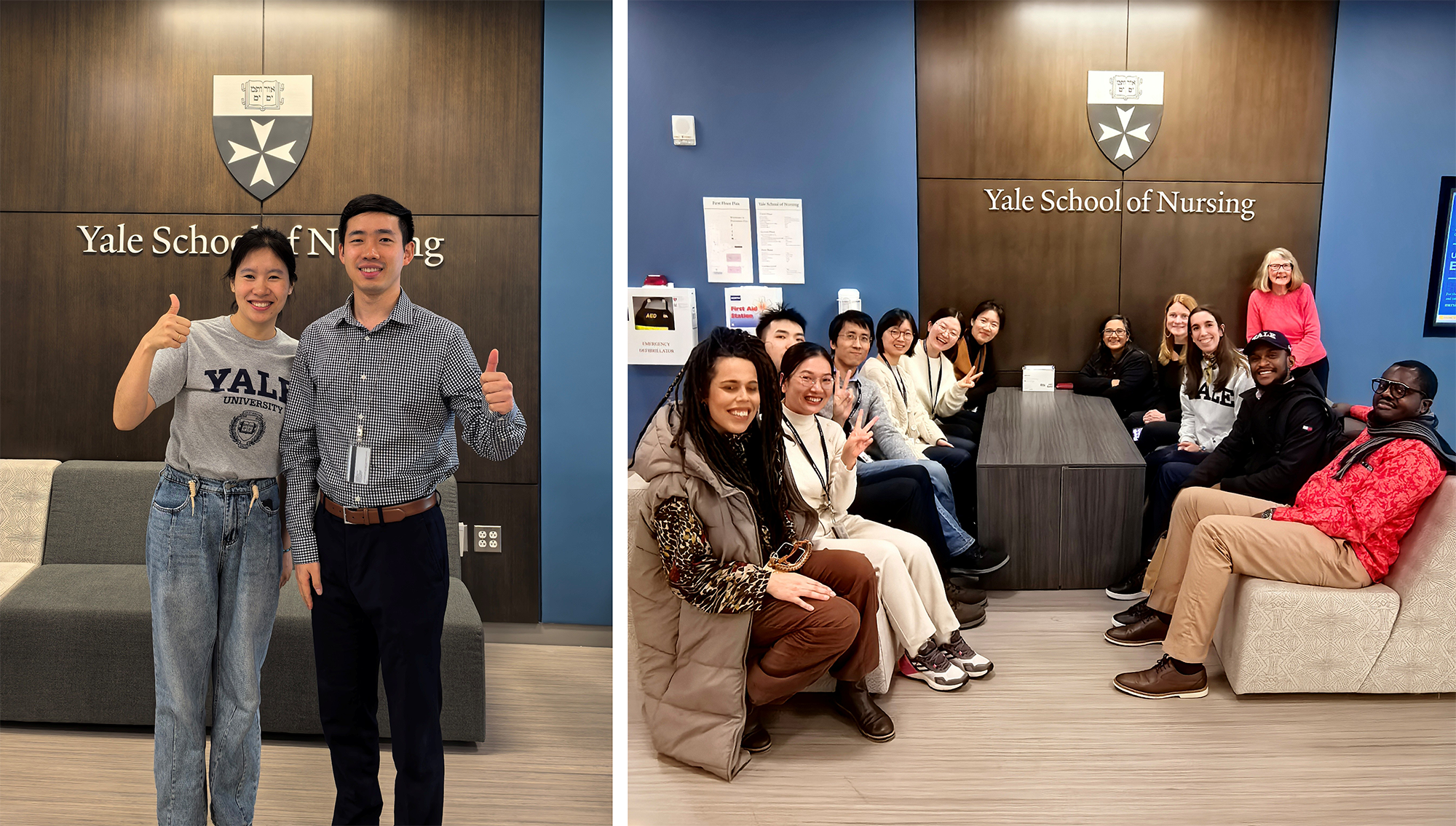
“When I returned home, I carried that clarity with me. The research I had been developing — a graphical assessment tool for evaluating the capabilities of community-dwelling elderly — moved forward with renewed purpose, nourished by the methods and insights I had gathered at Yale. Then in September 2024, I took what felt like the most meaningful step of my professional life: I formally began my doctoral studies in nursing, committing myself to the deep integration of elderly care and nursing informatics as my academic mission for the years ahead. On the late nights when the research is hard and exhaustion sets in, I find myself thinking of the warmth the Yale-China Association showed me, of the generosity of my teachers at Yale, of the trust Xiangya Hospital placed in me when they let me go, and of my family, waiting quietly for me on the other side of the world. Gratitude, to me, is not something you simply say — it is something you earn, slowly, through every honest step you take forward. One hundred and twenty-five years ago, the Yale-China Association planted a seed of connection across oceans and cultures. One hundred and twenty-five years later, that seed is still growing, still blooming, in the stories of people like me. I am so grateful to be even a small leaf on that tree. May this bond endure, and may it continue to bring warmth to all whose lives it touches.”
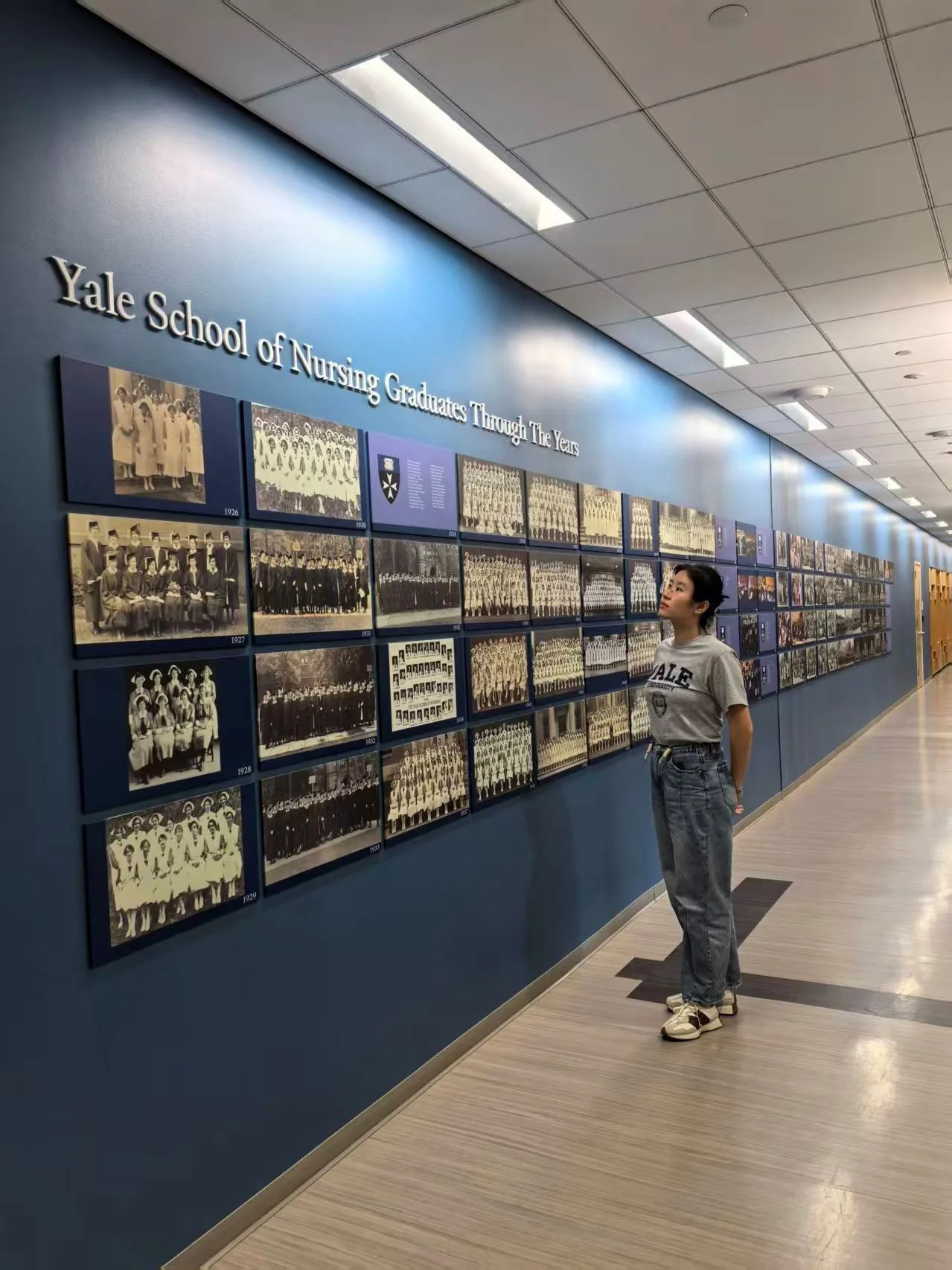
Li Jing is a supervising nurse at Xiangya Hospital, Central South University, specializing in nursing informatics and elderly care. She visited Yale School of Nursing from July to December 2024.