Posts in Community
One Person, One Classroom, One Hundred and Twenty-Five Years
 
In 1984, a young woman named Nina McPherson walked into a classroom at Central China Normal University in Wuhan.

At the time, none of us knew that she represented an organization with a history already stretching back more than eight decades. Nor did we understand that her presence in that classroom was part of a much larger story connecting New Haven and China, Yale and Yali, two cultures separated by oceans and political systems but joined by a quiet belief in the power of education.

To us, she was simply Nina.

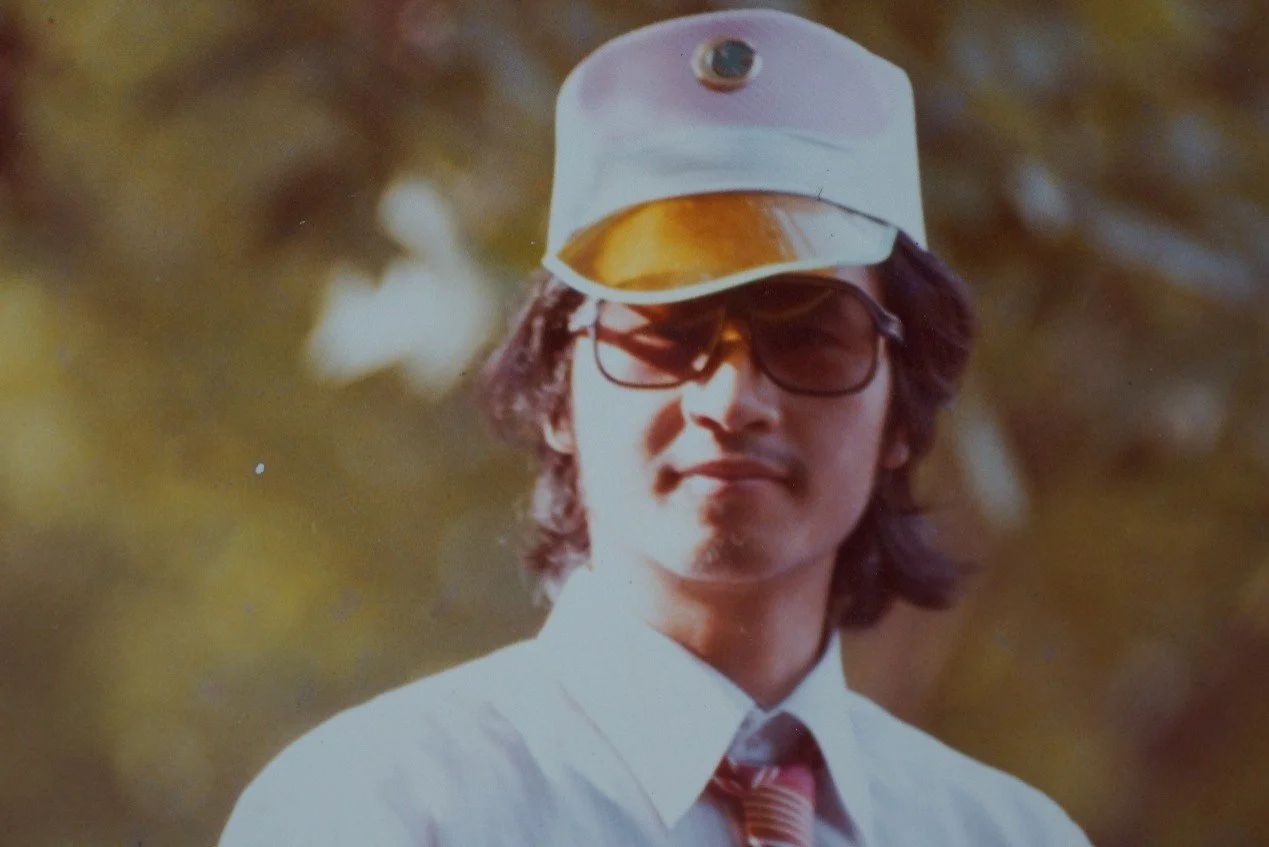
A photo of the author taken by Nina Mcpherson in 1985

Fresh out of Yale University, blonde, energetic, and not much older than many of the students she taught, she became the first foreigner most of us had ever met. China in the mid-1980s was only beginning to open to the world. For many of us who had grown up in small towns and rural villages, the outside world was something we knew only through books, newspapers, and imagination.

Then Nina appeared.

The first thing she gave us was not grammar or vocabulary. It was a name.

On the first day of class, she assigned English names to each student, offering several choices and encouraging us to select one we liked. I chose Tim simply because the first letter of my last name is also T. At the time it seemed like a small classroom exercise. Forty years later, I realize it was much more than that.

That name traveled with me from Wuhan to Beijing, from Frankfurt to Zurich, from Paris to New York. It appeared on business cards, conference badges, and countless introductions. Through it, a young man from rural western Hunan gradually learned to move through an international world.

The name was a gift. But the greater gift was confidence.

Nina made foreignness feel ordinary.

She showed us that people from different countries were not mysterious or frightening. They laughed, made mistakes, shared meals, worried about life, and cared about their students. Through her, many of us began to trust people beyond our own culture. In later decades, Americans, Germans, French, Swiss, Indians, Pakistanis, Vietnamese, Koreans, and Nigerians would become colleagues, partners, and friends. Looking back, I can trace that openness to a young Yale graduate standing in front of a classroom in Wuhan.

Photographs from those years preserve moments that memory alone cannot.
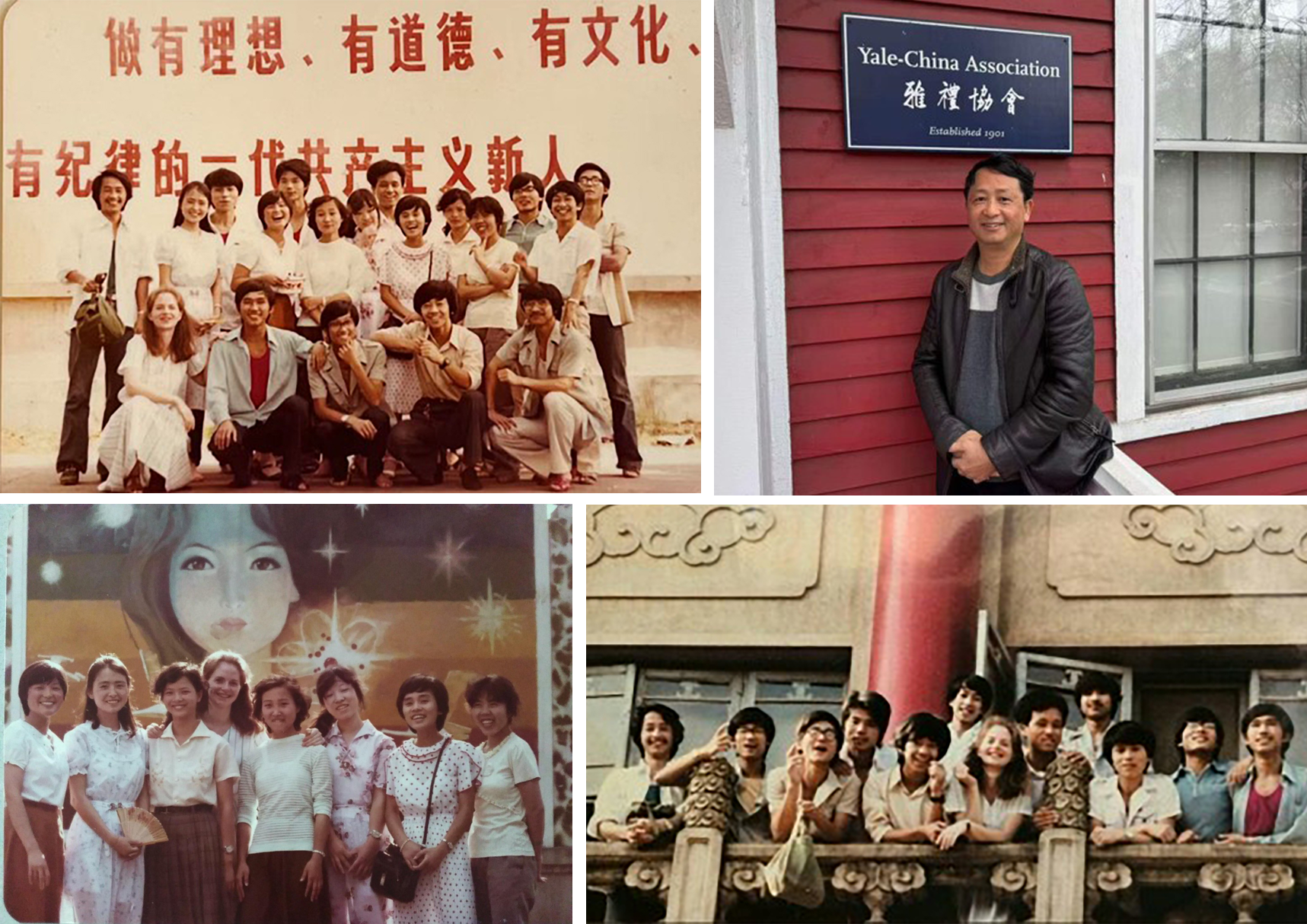
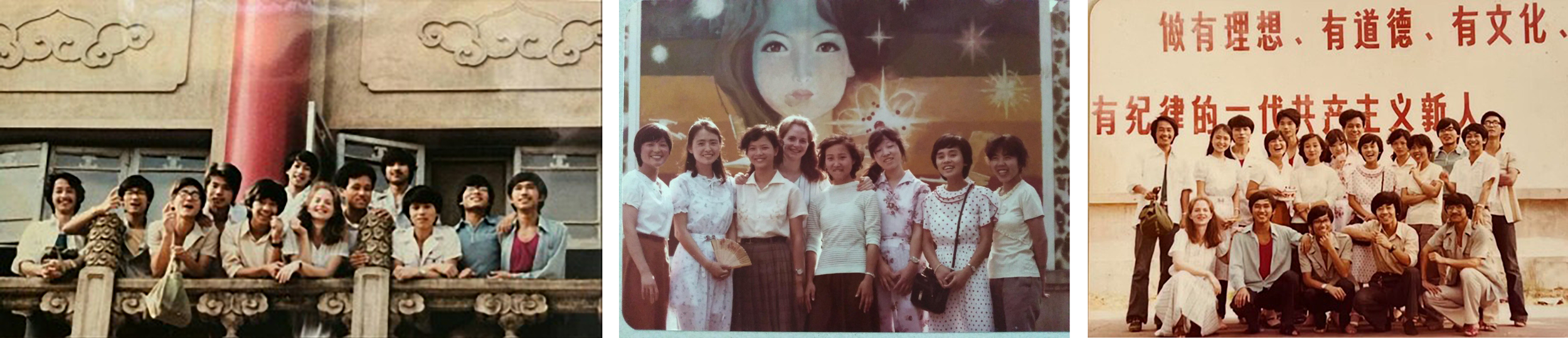
In one picture, Nina stands among a group of young men leaning over a balcony railing. Behind them rises a massive red column of the university building, occupying the center of the frame. The students wear expressions that only youth can produce—half confidence, half uncertainty, entirely hopeful. Looking at the photograph today, the red pillar seems almost symbolic. It stands like a bridge between worlds, connecting students who had barely seen beyond China with a visitor who had crossed the Pacific to teach them.

In another photograph, Nina stands among a row of female students. Behind them is a large mural of a young woman’s face, painted in soft yellow tones and decorated with sparkling stars. The image captures the aspirations of an era. China was beginning to imagine possibilities beyond old limitations, and those students, like the figure in the painting, looked toward a future that seemed both distant and luminous.

A third photograph shows the entire class gathered around Nina. Behind them hangs a political slogan familiar to every Chinese student of that generation. Yet what catches the eye today is not the slogan but the people. The future professors, teachers, scholars, businesspeople, and professionals stand together around a teacher who, without knowing it, would become part of their life stories.

Nina’s influence extended far beyond language instruction.

She introduced us to Impressionism and Post-Impressionism. For many students, it was the first time seeing Western art. Some still remember their first encounter with nude paintings in a university library under Nina’s guidance. Others remember learning about Monet, Van Gogh, and Cézanne. Several classmates later became university professors and would eventually teach those same ideas to new generations of students.

Her writing classes were equally memorable. She corrected essays with extraordinary care, evaluating vocabulary, sentence quality, content, grammar, and rhetoric separately. She selected excellent phrases from student papers, typed them on a typewriter, and distributed them for discussion. Long before “student-centered learning” became a fashionable term, Nina practiced it naturally.

She taught us how to write. More importantly, she taught us how to think.

Outside the classroom, she embodied generosity.

She lent students her camera for a budget trip to Lushan Mountain. She shared books. She brought chocolates sent by her mother from America—tiny treasures in a China where few students had ever tasted chocolate. She invited students to meals and encouraged conversations that continued long after class ended.

Years later, classmates would remember details that seemed insignificant at the time: a lunch of hot dry noodles, an evening conversation outside her apartment, advice about writing to the university president or the city mayor, encouragement to speak English without fear.

What remains remarkable is not any single memory, but the consistency of them all.

Again and again, people remember kindness.

Again and again, they remember curiosity.

Again and again, they remember respect.

Only later did many of us learn that Nina was part of a much larger story.

She had come to China through Yale-China Association, known in Chinese as the Yali Xiehui.

Founded in 1901, Yale-China has spent more than a century building relationships between China and the United States through education, medicine, public health, and cultural exchange. Its impact can be measured in institutions, schools, hospitals, and programs. Yet perhaps its deepest influence cannot be measured statistically.

Its true legacy lives in human relationships.

History often records organizations through budgets, buildings, and official achievements. But organizations ultimately shape history through people. The influence of Yale-China was carried not only by presidents, scholars, and administrators. It was also carried by individuals like Nina, who entered classrooms, shared knowledge, listened carefully, and built trust one conversation at a time.

One young teacher influenced dozens of students.

Those students became professors, educators, researchers, entrepreneurs, and professionals.

They taught thousands of students of their own.

The circle expanded.

This is how influence moves across generations.

This is how history works.

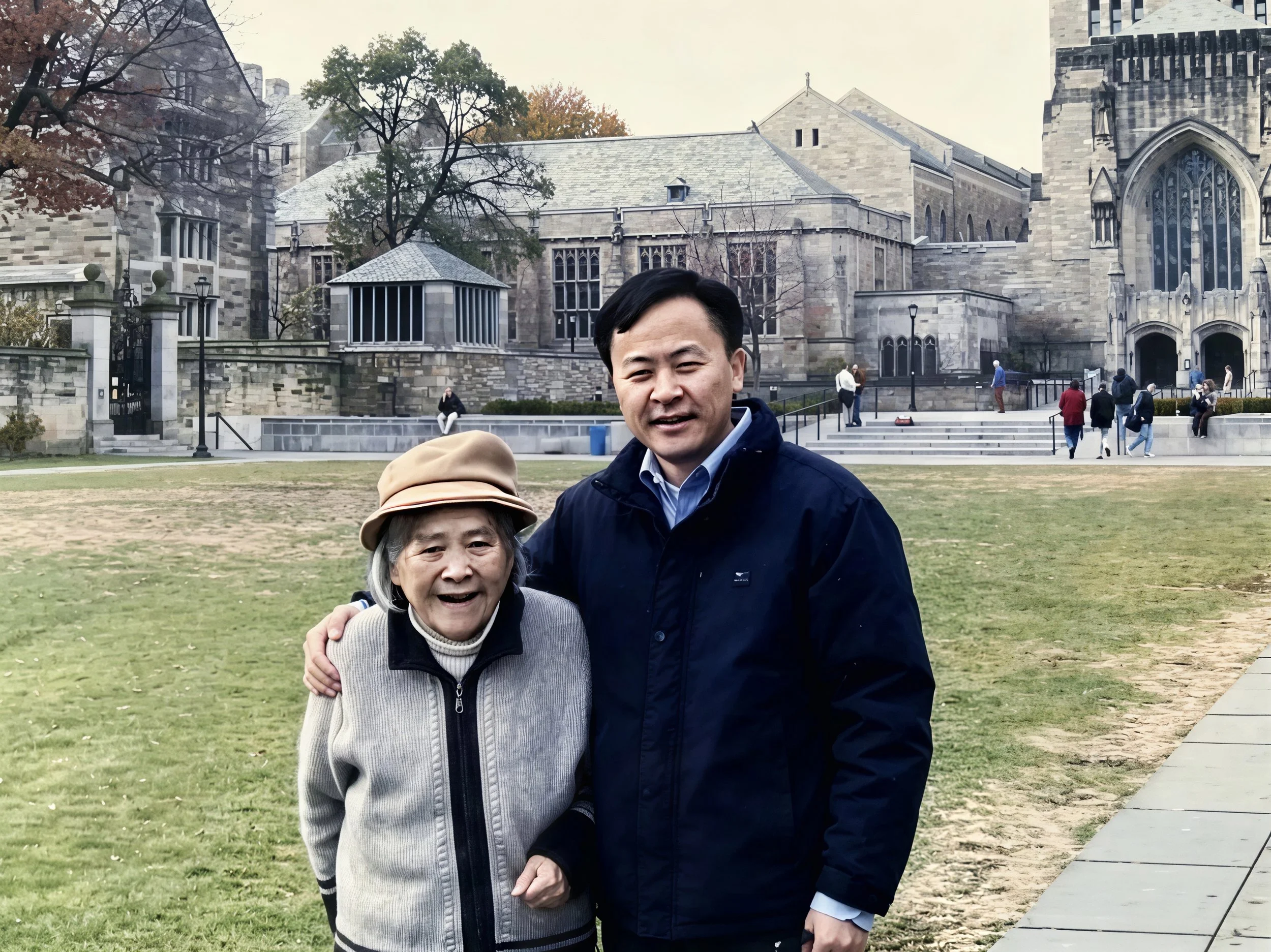
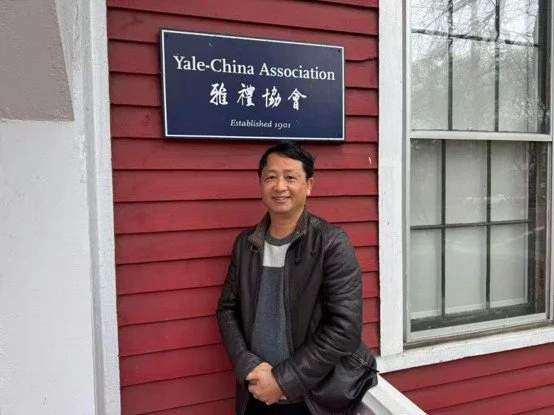
The author visited Yale-China Association in April 2026

When I visited Yale-China’s headquarters at Yale University in 2026, more than forty years after Nina first walked into our classroom, I found myself thinking less about institutions and more about people.

Organizations create opportunities.
People create memories.

Organizations build bridges.

People cross them.

For 125 years, Yale-China has connected two nations not primarily through policies, but through relationships. It has done so through countless individuals whose names may never appear in history books, yet whose quiet actions altered lives.

For our class, one of those people was Nina McPherson.

We remember her not because she represented an institution.

We remember her because she made the institution human.

And perhaps that is the most enduring achievement of Yale-China over the past century and a quarter: transforming distant nations into familiar faces, and turning strangers into lifelong friends.
— Tim Tang, Ph.D.
 
 
My First Foreign Teacher, Ms. Nina McPherson
 
 
In September of 1984, as a new student in Class 8403 in the English Department of Central China Normal Institute (now Central China Normal University) in Wuhan, Hubei, life was full of happy surprises and possibilities. We welcomed Ms. Nina McPherson as our first foreign teacher, who touched our lives, made huge influence on us during the two years she taught us English.

She was a new Yale University graduate and taught us Conversational English in the first school year and then English Composition in the second year. Even after more than 4 decades, I still remember how she came across as a foreign teacher, just a few years our senior, confident, energetic, versatile, enthusiastic, and passionate about her job.

In the two years, she brought numerous first experiences to us. She asked us to call her Nina, not the usual way we addressed our teachers from primary school to university. Surprise, happy surprise!

After two or three weeks, she helped us to find an English name for ourselves for the first time. She sat with each of us and learned how we pronounced our Chinese name and she wrote down a handful of English names that sounded like or close to our Chinese names and asked us to select one that we wanted to be our own names. It was surely a fun and warm assignment. We happily selected a name we liked, enjoyed a naming right that usually belongs to parents and stick to that name ever after.

Mid eighties was a time when China just opened its door to the outside world. She was our very first foreign teacher and brought native English to our classroom. Most of us did not hear native English speakers, let alone of having real contact with a foreigner. She filled our first imagination of the America, a far away country across the Pacific Ocean and its people with a positive note.

The English we learned from our textbooks was quite different from the real-world English spoken by native English speakers. For most of us, that was the first time we heard real-life English spoken by a native speaker. The American English that came out of her mouth so naturally and effortlessly was music to our ears.

Nina also brought color photos to our lives for the first time. The color group photographs she took for us brought back fond memories of those university years. It was rare for average Chinese to have cameras for color photos back then. It was extremely hard to find a shop that could develop color photography in the first year.

Nina had a passion towards her job and went extra miles to help us to learn and grow our English. She committed a ton of her spare time helping us to speak and write what we intended so we got our ideas out clearly and naturally. She authored some short funny English dramas from her own experience in learning and using Chinese language and directed her students to perform them, like the confusion of “me” and Chinese last name “Mi”, “who” and last name of “Hu” , which helped some of us found the acting talent that they did not know they had.

It is safe to say that she was the first person that introduced us to western paintings. We were shocked and excited when we opened those hard copy books of western paintings in the classroom. I believe she used her status as a foreign teacher and her wonderful persuasion skills to borrow those books from the university library for us. We were very shy to see those paintings of naked men and women, had no clue on how to appreciate those paintings. She asked us to tell what it was in the painting using our own words and what the artist wanted to convey. Bit by bit, we developed the sense and skill to appreciate Western paintings. Personally, I nurtured a love of impressionist paintings from those classes. The sweet memory of those classes came back each time when I stand in front of an impressionist painting in the museums and galleries I visited in many countries over the years. Each time I am grateful that I had the opportunity to see those great paintings in the classroom and had developed the skills to appreciate the beauty of Western painting.

During the second year when she taught us English composition, Nina taught us how to write an essay with an introduction, supporting paragraphs and a conclusion. She showed us with well-written essays how to construct a paragraph with a topic sentence with supporting details, make connection and transition from one paragraph to another and end the essay with a reinforcement statement. She scheduled time with each of us to go through our essay individually and went paragraph by paragraph and sentence by sentence on how to improve our writing. Each of us benefited enormously from those one-on-one conversations. These basic writing skills have proved practical and handy in our future life and career no matter what we do for a living.

Just as she put her whole heart into her teaching role, Nina strove to excel in everything she did. When she first went to China, she was armed with little English. While she stayed in China, she seized every opportunity to speak and improve her Chinese. By the end of her second year in China, she could speak very fluent Chinese you could hardly believe.

The way Nina committed to her teaching job and interacted with her students made her an unforgettable teacher for many of us and left a lasting mark on our lives in the years to come. I hope that young people from China and the US today can benefit from the open minds both countries demonstrated during that time and Yale-China could find people from both countries that are ready to open their minds and embrace a journey to understand people who speak different languages and learn from each other just like Ms. Nina McPherson.
— Julia Liu
 
 
A Legacy Forged in Changsha: Reflections on Yale-China’s 125th Anniversary
 
 
There are moments when history ceases to be a collection of dates and becomes something you feel in your bones. For me, that moment arrives every time I step off the plane in Changsha. The humid air, the surge of the Xiang River, and the modern skyline stand as testament to a city reborn. Yet beneath that modernity, I walk in the footsteps of giants. As great-grandson of Dr. Edward Hicks Hume, founder of what would become the Xiangya Hospital system, my life has been a series of bridges between a distant family past and the living, breathing Chinese present. As Yale-China celebrates its 125th anniversary in 2026, I find myself reflecting on the invisible ties that bind a Yale graduate from 1897 to the bustling Changsha of today.

When Dr. Hume arrived in Changsha in 1905, he walked into a world of suspicion and hostility. He later recounted his arrival in vivid detail in his memoir, Doctors East, Doctors West. At the dock, he faced stares and whispers, wondering whether the crowd was friendly or hostile. Passing through the city gates, he saw posters with anti-foreign slogans. Mothers hid their children from the “evil eye” of the foreigner, and he could hear the muttered epithet “Yang guizi” (洋鬼子)—“foreign devil.” His colleague Brownell Gage described the suffocating feeling of the walled city’s narrow streets, where hanging signs and straw awnings blocked out the sun entirely. Into that environment, in 1906, Dr. Hume founded a small 20-bed clinic in a former rice warehouse on West Pailou Street. They named it “Yali” (雅礼), a phonetic rendering of Yale that also conveyed the Confucian concept of “refined comportment.” That tiny clinic was a seed from which a mighty tree would grow.

My great-grandmother, Lotta Carswell Hume, managed a household that was a microcosm of cultural negotiation, navigating Chinese social hierarchies with humor and deep curiosity. She collected the stories she heard from neighbors and her children’s Chinese playmates, and years later shaped them into a cherished book, Favorite Children’s Stories from China and Tibet. Growing up, we were spellbound by those same tales. It was our first introduction to the land where my grandmother, Charlotte Elizabeth Hume, was born in 1906 in the mountain retreat of Kuling.

The real breakthrough came in 1914. The local Hunanese gentry, led by figures like Tan Yankai, desired a medical college to train Chinese physicians in modern science. An agreement between Yale-China and the Hunan Yuqun Association created the first cooperative educational venture of its kind in China. The new institution was named “Xiangya” (湘雅), combining the literary name for Hunan – “Xiang” – with “Ya” for Yale. A Chinese saying was born that endures to this day: “In the North, the Union; in the South, Xiangya,” placing the young institution on par with the Peking Union Medical College, established in Beijing around the same time by the Rockefeller Foundation.

Dr. Hume’s philosophy was ahead of its time. He insisted on the highest scientific standards while deeply respecting Chinese culture. “We are guests here,” he wrote. He actively recruited brilliant Chinese colleagues, most notably Dr. Yan Fuqing, the first Chinese graduate of Yale Medical School, who became Xiangya’s founding dean. In 1925, as Dr. Sun Yat-sen lay ill in Beijing, a group of Xiangya medical students requested a message from the dying revolutionary leader. He took up his brush and wrote four powerful characters: 学成致用 (Xue Cheng Zhi Yong)—“Learn, and then put it into practice.” It was a mandate from China’s founding father to an institution our great-grandfather had helped build.

The mid-1920s brought tremendous strain. As Chinese nationalism intensified, Dr. Hume proposed turning over administrative control of the college to Chinese leadership. When the trustees in New Haven rejected the proposal, he made the personally difficult decision to resign in 1927, a testament to his conviction that the work must be Chinese-led to endure. It did endure. During the Second Sino-Japanese War, Xiangya’s staff packed their equipment and followed the Chinese government inland, treating casualties and refugees across a country at war. Our formal partnership was severed in the early 1950s with the Korean War, but the foundation was too strong to crumble.

In 2009, I had the privilege of retracing my great-grandfather’s steps. Standing before Xiangya’s iconic Red Building, completed in 1916, I felt the weight of a century. The welcome I received was extraordinary. Chinese colleagues speak of Dr. Hume not as an outsider, but as a friend, a founder, and a pioneer. Today, Xiangya performs over 100,000 operations a year and has sent medical teams to battle Ebola in Sierra Leone. In 2016, I stood before a portrait of my great-grandfather alongside Dr. Sun Hong, President of Xiangya Hospital. It was a moment of full circle.

The Chinese say: 前人栽树,后人乘凉—“The predecessors plant the trees, and the descendants enjoy the shade.” For over a century, I have enjoyed that shade. Now it is our turn to plant. Yale-China’s next 125 years call us to mutual trust, new science, and a shared responsibility for the world we hold in common. The work is not done. It has only just begun.
— Nathan Shroyer, great-grandson of Dr. Edward Hicks Hume
 
 
A Profound and Long-Lasting Positive Influence
 
 
My parents attended Yale-in-China in the late 1930s, during the turmoil of the Japanese invasion of China. That both families chose to enroll their offspring to a missionary-founded middle school and then to Hua Chung amid ongoing conflict and economic hardship speaks to the vision of both sets of my grandparents.

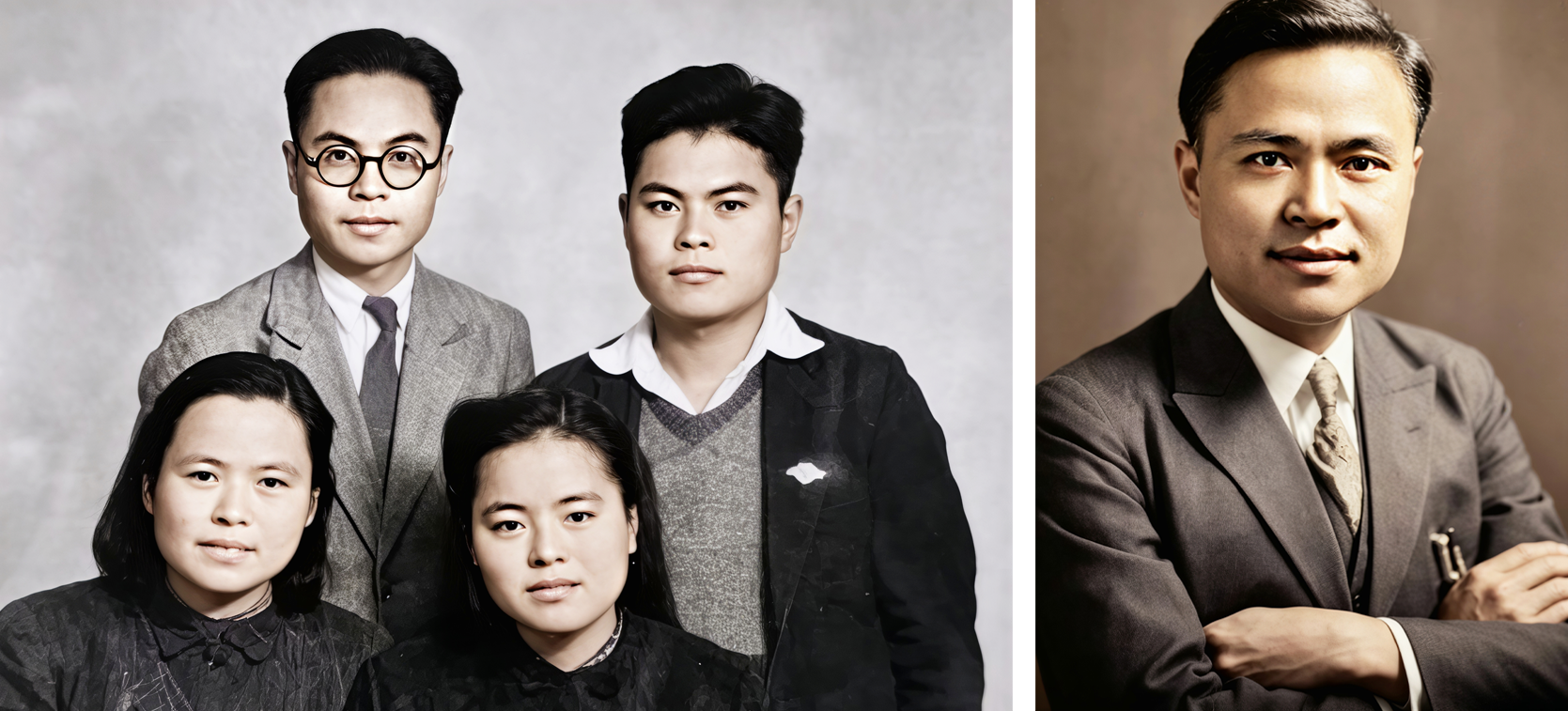
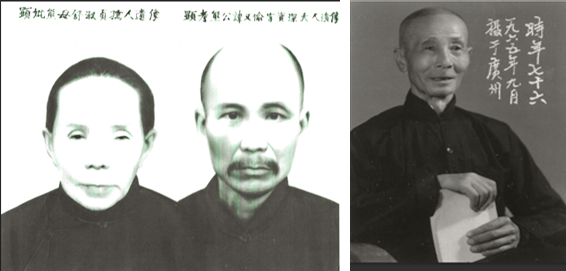
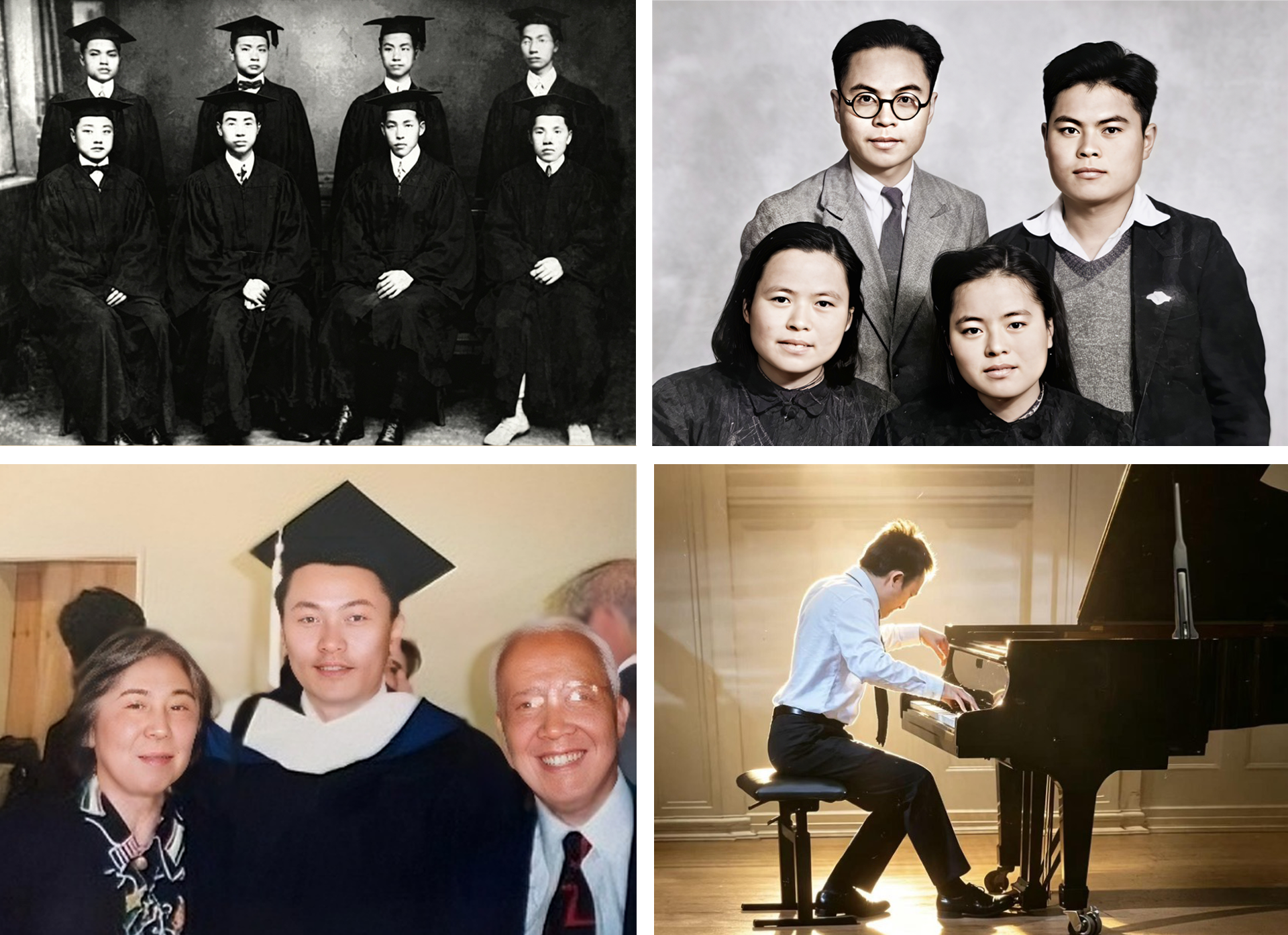
Left: My maternal grandparents from Wuhan; Right: My paternal grandfather from ChunShan

Soon after reporting for classes at Hua Chung, the administration, faculty and students trekked from Wuhan toward Yunnan to escape from the bombings. Classes and labs were held enroute. Irving Chang, one of the student leaders of Hua Chung, recalled the following experiences during the trek:

’Summer of 1938, Hua Chung University had relocated to Guilin, Guangxi, where the threat of war was ever-present. Yet the university pressed on. One day, mid-way through a physics class, the first air raid alarm sounded — but our instructor was determined to finish the chapter, so we stayed. For us, interrupted lessons were simply part of the rhythm of student life in wartime. Education would not wait, and neither would we.’

After earning their degrees in 1942, Mom and Dad became instructors of the university in Xizhou. When Japan surrendered in 1945, the college returned to its home campus. Just prior to the return trek, Bishop Gilman of Hua Chung married Ling Chin Yu and Xiong Ai Deh on May 5, 1945. Mom carried me in her tummy during the trek back to Wuchang, where I was born on August Moon Festival Day in 1946.

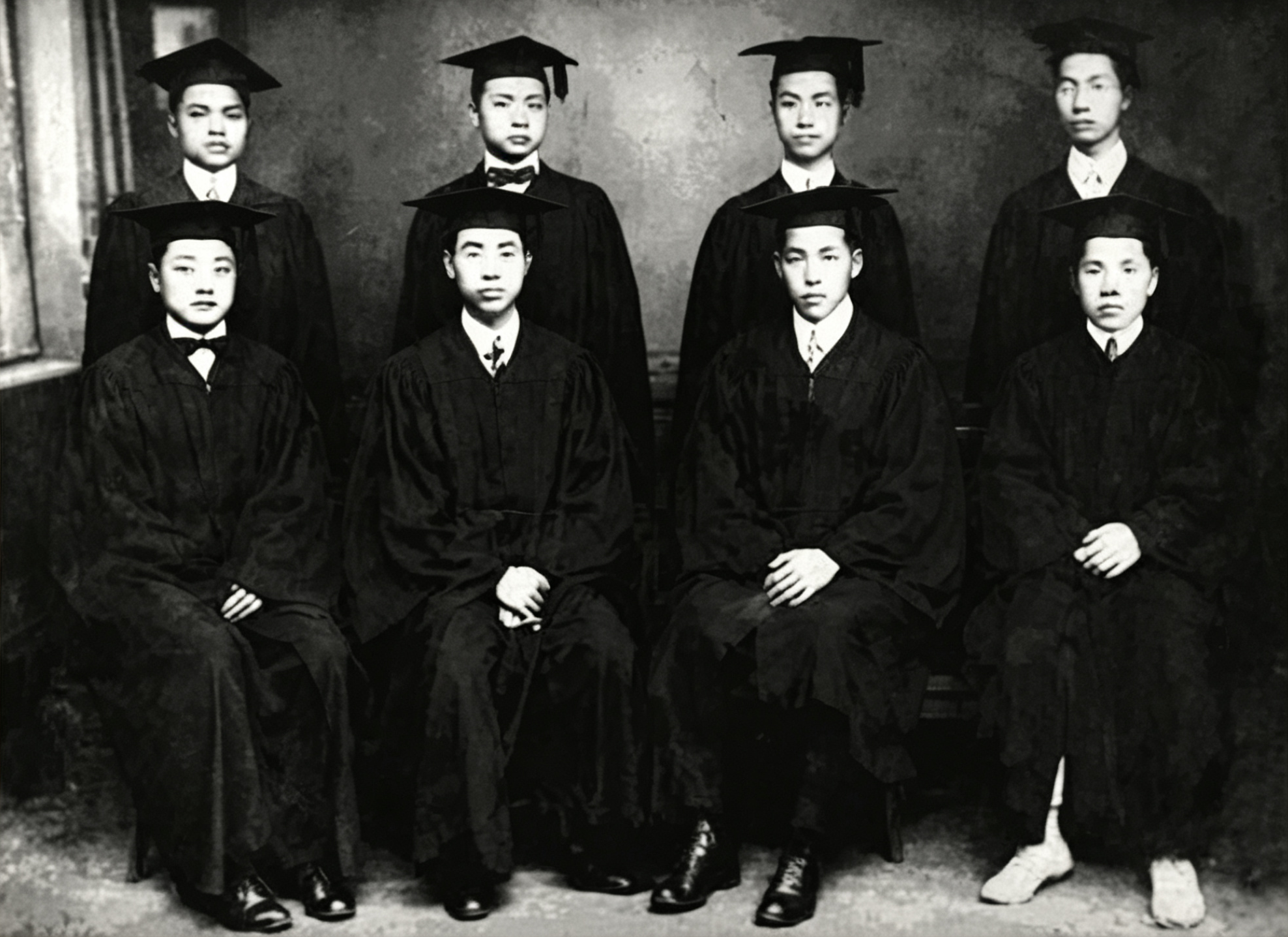
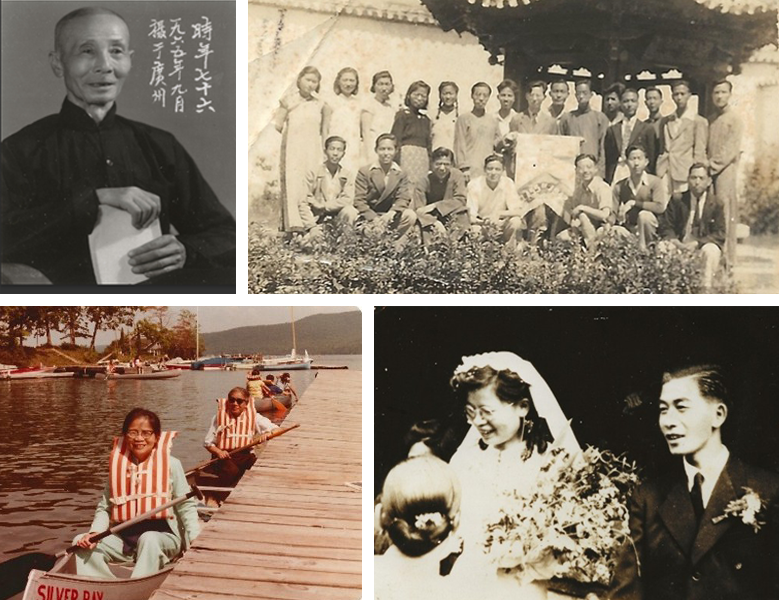
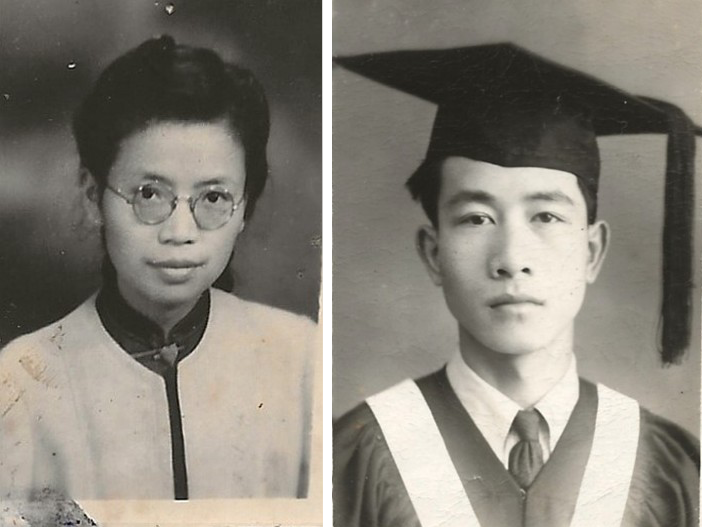
Left: Hsiung Ai-Deh (my mom) as an undergraduate; Right: Dad’s Yale-in-China graduation photo (1942)

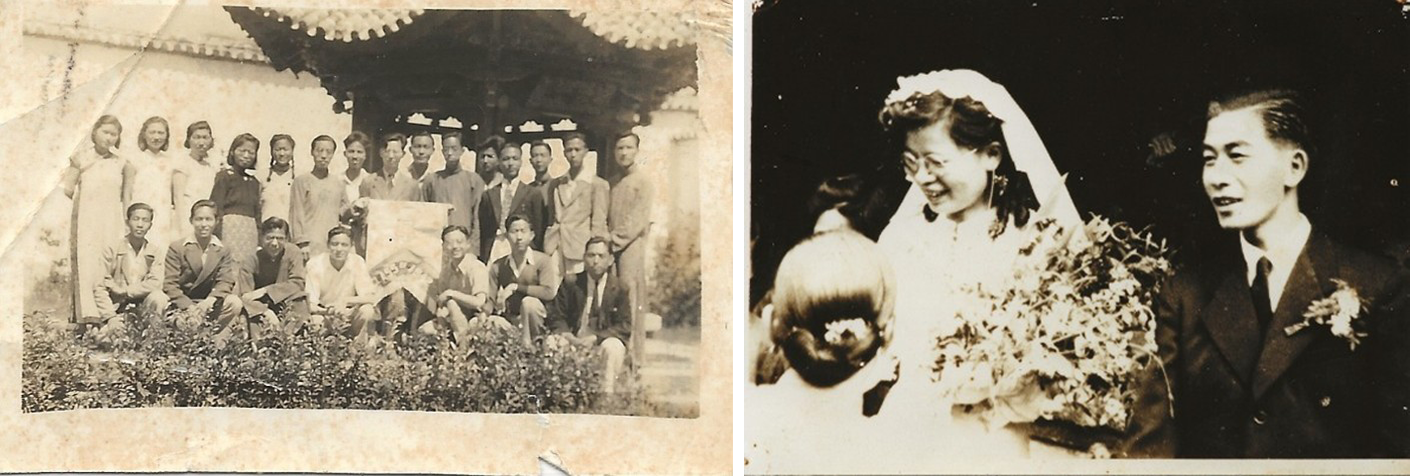
Left: Mom and Dad’s Yale-in-China Class of 1942; Right: My parents’ wedding officiated by Bishop Gilman of Hua Chung (May 1945)

The years at Hua Chung had a profound and long-lasting positive influence on my parents. The classmates maintained life-long friendships—well into their elderly years—even after emigrating to the States and Europe. Hua Chung alumni of the New York-New Jersey area held annual get-togethers at each other’s homes or at outings in scenic New York State parks.

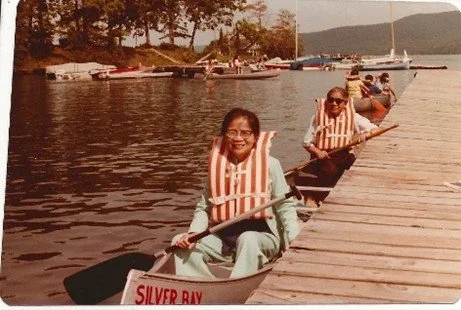
Mom and Dad at Silver Bay (Lake George, New York) during a Hua Chung alumni picnic, 1978

Those alum gatherings gave several generations a real sense of the camaraderie, sustained over time and place from the 1930s into the 21st century. Both my parents continued their passion for the sciences throughout their careers. Mom worked in the laboratory of Nobel Laureate Marshall Nirenburg at the National Institutes of Health (Bethesda, Maryland), and Dad received his Ph.D. in physics from the University of Missouri.

It is a privilege to share this on the occasion of Yale-China’s 125th anniversary. Thank you.
— Florence Ling Myers, Ph.D.
 
 
Yale-China, the Bridge Between Dr. Edmund H. Worthy, and Me
 
 
‘Edmund (Ed) Henry Worthy, Jr. – educator, non-profit leader, and museum executive – died on March 27, 2021 from metastatic cancer.’

This is the beginning of the obituary written by Mr. Worthy himself.

In the fall of 1963, at New Asia College, (part of the Chinese University of Hong Kong), I met Mr. Edmund H. Worthy, who assisted me to overcome my language challenges as a Freshman in the English Department. My encounter with Mr. Worthy not only changed my dismal outlook on my future study in the Department, but also inspired me with the meanings of volunteerism in everyone’s life.

We called the young, energetic American Yale-China Education Fellows “Yale Bachelors.” Since 1901, Yale-in-China ( Yale-China) Association has sent Yale graduates to teach in China and, after 1949, Hong Kong. Literally so, when they started teaching the Freshman and Sophomore English and Literature classes, they were holding a Bachelor’s degree; and all of them were unmarried.

The two-year service of the Yale Education Fellows greatly impacted and enriched the lives of their students and communities; and at the same time, their unique experiences promoted their individual understanding of the Chinese language and culture. In our Yale-China story, both Mr. Worthy and I have changed our lives for the better, nurtured our decades of friendship, and participated in carrying out the mission of such a special organization.

Chart House, Alexandria, Virginia, April 2011

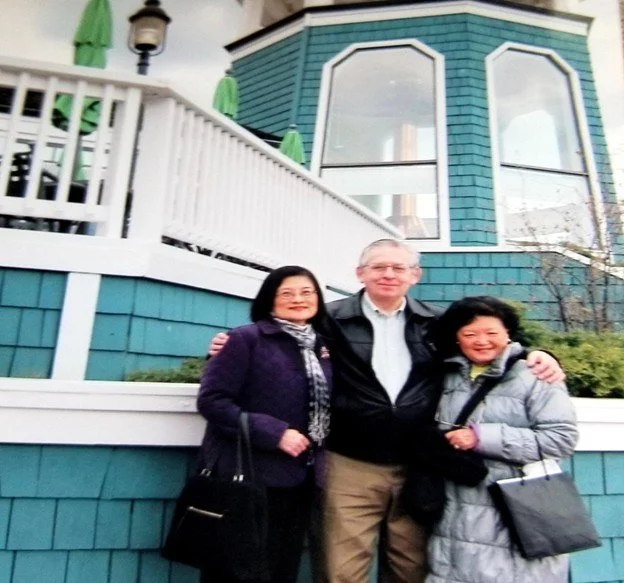
It was not easy for me to address Mr. Worthy as “Ed “, at his insistence, some forty odd years later, when we met again in early April, 2011, in Washington DC. We went for lunch at Chart House along the banks of Potomac River. It was a cold and windy day, luckily dry, though. Mr. Worthy married his Mandarin teacher in Hong Kong in 1965. It was the first time for my husband to meet both of them. In no time, everyone had warmed up and was immersed in conversation, in fluent Mandarin and English. I took the opportunity to express my gratitude towards my respectable teacher, who had gone beyond his duty to help me in the study.
Mr. Worthy worked with me on a one-to-one basis once a week after class hours in my Freshman year. He assigned to me extra reading materials and writing assignments to boost up my English proficiency. I still remember the one assignment to read and analyze an American short story, “The Man Who Saw Through Heaven”, by Wilbur Daniel Steel. Exceptionally for one time, Mr. Worthy allowed me to write any topic on the story. Most part of the story has become obscure to me now, but the phrase “Father Witch” has stuck with me for almost half a century. Mr. Worthy playfully challenged me, “Show me. How do you know that Reverend Diana, called by the natives “Father Witch”, has returned to his old faith? “ I pointed vigorously at the page of the book, “He is praying ‘Our father which art in Heaven’ in Lord’s Prayer!” Mr. Worthy beamed and said approvingly, “Well done! Recently your writing style has also improved.” I was elated! That was how I gradually built up my confidence in my work, and my aptitude for language and literature helped me through the years. Without Mr. Worthy’s support, encouragement and sacrifice, I would have struggled miserably and shifted my direction towards a different field of study as my other eleven fellow freshmen did.
‘From 1971 to 1974, Mr. Worthy was director of the Yale-China program and lecturer in the Chinese University’s history department. He laid the groundwork for the establishment of the university’s International Asian Studies Program for overseas exchange students.’ ( Excerpts from Mr. Worthy’s obituary). I last saw Mr. and Mrs. Worthy in Hong Kong in June, 1972 at my farewell party before my departure for Michigan. Then in less than two years, Mr. Worthy and family also returned to the US so that he could complete his PhD program in Chinese History at Princeton University.

There was a long period of time when each of us was so fully occupied on our respective life paths that we did not keep up with our correspondence regularly. I now particularly appreciated reading his obituary and an excerpt from the 50th Reunion Class Book of the Yale 1962 graduates. From his own reflections on his varied challenges in life, in his own words, I have learned all the unknown gaps in his productive years and his contributions to the communities. Among them, volunteerism was one of his most impressive achievements.

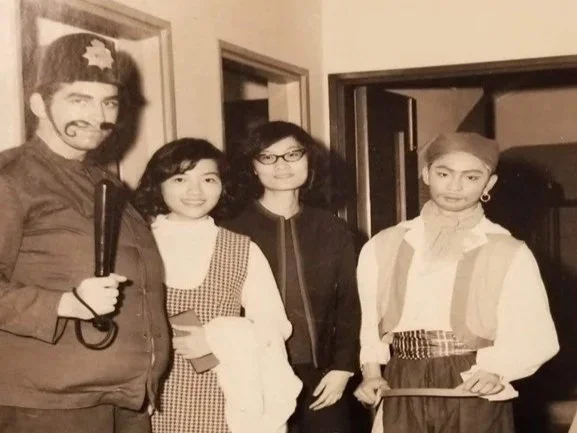
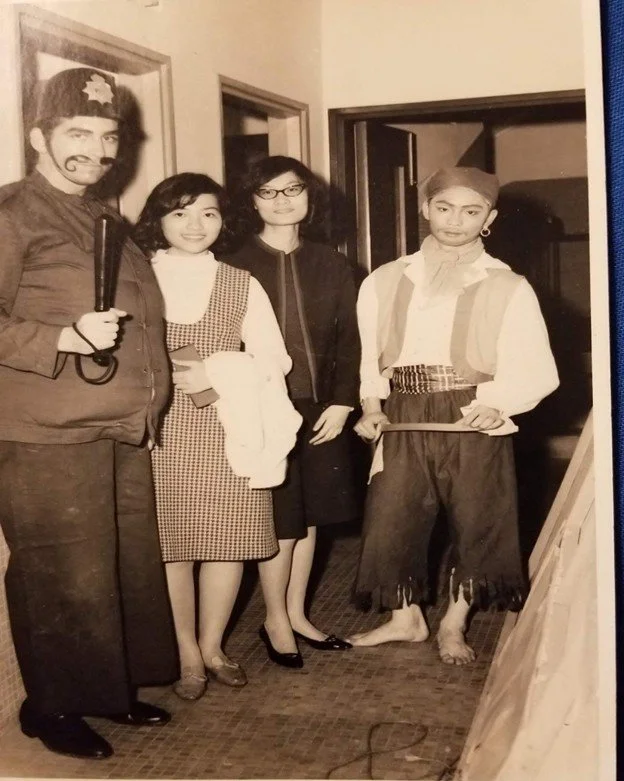
Pirates of Penzance, New Asia College, 1963-1964

When Facebook kept reminding us to celebrate Ed Worthy’s 81st birthday on June 12, my heart ached as much as it did upon my reading his last letter of grave news about his cancer in January, 2021. In his enclosed family photo, surrounded by his loved ones, Mr. Worthy, wane and frail, looked at me with his familiar luminous and unflinching eyes in all smiles. I couldn’t help reminiscing about one photo of him in Gilbert and Sullivan’s comic opera, Pirates of Penzance. Mr. Worthy was dressed in a policeman’s costume, with a fake mustache and a pillow stuffed at his belly. He and a pirate classmate flanked Juni and me in a hallway. We all looked so youthful and buoyant at that moment of our life!
— Shiu-Fong (Ng, née) Tse
 
 
Family Ties Expanded Around the Globe
 
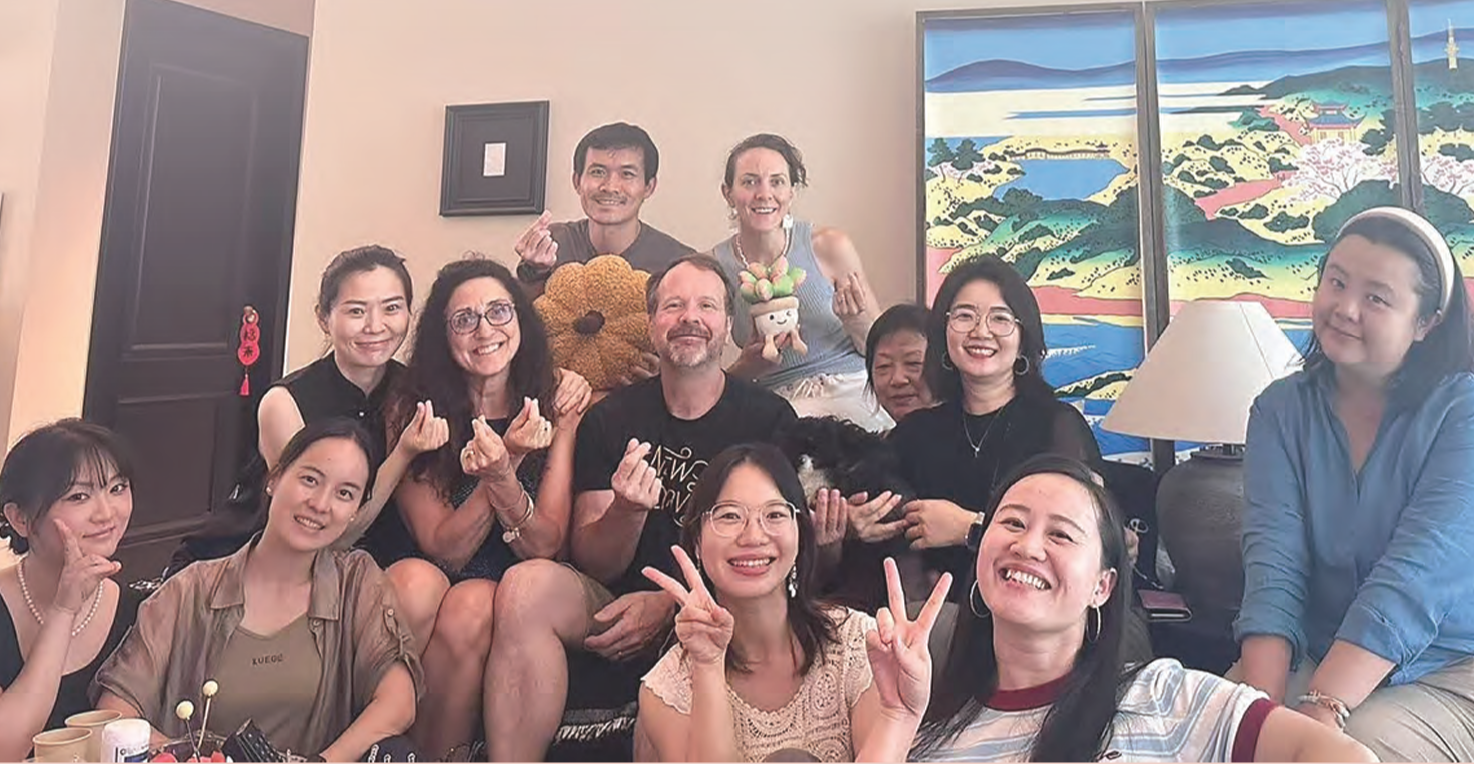
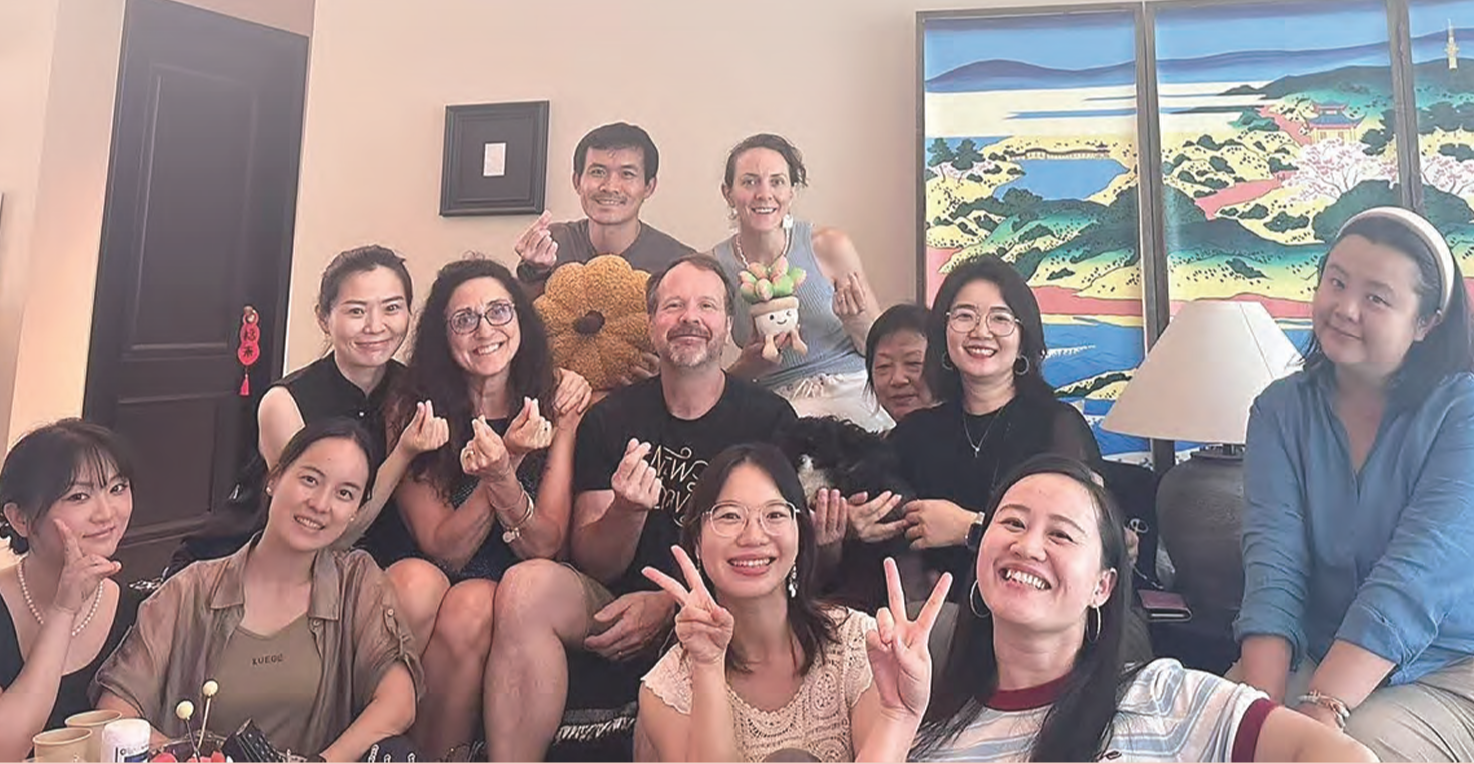
This year marks the 10th year our family has been hosts/ambassadors for the Chinese teaching Fellows and the YUNA visitors in New Haven. We have so many favorite memories of holidays and conversations and time shared. Doing so many ‘firsts’ like Halloween, Thanksgiving, Christmas, Easter, sledding, skiing, skating, baking, hiking and so much more. Each of the Fellows has enriched our lives and we feel like we have 25 more ‘family members.’ We have travelled to China for a Fellow’s wedding and visits, have celebrated the birth of new babies and watched (from here) the full lives of each Fellow. Thanks to Yale China for entrusting our family all these years and for expanding our family ties around the globe. All the best on this amazing milestone anniversary — here’s to another 125!
— The Judd Family, Host Family
 
Lifelong Bonds Over a Decade
 
When Kim and Mike Rogers began hosting Yale-China Teaching Fellows in 2012, they expected to offer little more than a spare room and some home-cooked meals. Instead, they built lifelong bonds with dozens of Fellows, weaving them into family holidays, traditions, and trips to China. More than a decade later, the connections have grown so deep that one Fellow’s daughter—born on Thanksgiving Day—calls Kim her ‘American grandmother.’
— The Rogers Family, Host Family